
The battle of IPTV vs cable has been intensifying for years, and in 2026, more consumers than ever are questioning whether traditional cable TV is still worth the cost. With millions of households cutting the cord annually, understanding the differences between IPTV and cable TV has become crucial for making an informed entertainment decision.
This comprehensive guide compares IPTV vs cable across every important factor – cost, content, quality, flexibility, and more. By the end, you’ll know exactly which option best suits your needs and budget.
IPTV vs Cable: Understanding the Basics
Before diving into the detailed IPTV vs cable comparison, let’s clarify what each service represents:
Cable TV delivers television programming through coaxial cables connected to your home. Cable companies transmit all channels simultaneously to your cable box, which then tunes into the specific channel you want to watch. This technology has been the standard for decades.
IPTV (Internet Protocol Television) streams television content over your internet connection. Instead of receiving all channels at once, IPTV delivers only the specific content you’re watching when you request it. This is the same technology Netflix, Hulu, and YouTube TV use.
🔑 Key Difference
The fundamental difference in IPTV vs cable is the delivery method. Cable uses dedicated infrastructure and sends everything to everyone. IPTV uses your existing internet connection and sends only what you want to watch, making it more efficient and flexible.
Cost Comparison: IPTV vs Cable TV
When comparing IPTV vs cable, cost is often the deciding factor for most households. Let’s break down the real costs:
Cable TV Costs
A typical cable TV package in 2026 includes:
- Basic Package: $80-120 per month (100-200 channels)
- Premium Channels: $15-25 each (HBO, Showtime, Sports packages)
- Equipment Rental: $10-20 per month (cable box, DVR)
- Installation Fee: $50-100 (one-time)
- Taxes and Fees: $10-30 per month
- Total Average Monthly Cost: $120-180
Annual cable TV cost: $1,440 – $2,160
IPTV Costs
Premium IPTV services like IPTV Architect offer:
- Monthly Subscription: $14.99 (includes 47,000+ channels)
- 3-Month Plan: $29.99 ($10/month)
- Annual Plan: $69.99 ($5.83/month)
- Equipment Rental: $0 (use devices you own)
- Installation Fee: $0
- Taxes and Fees: None
Annual IPTV cost: $69.99 – $179.88
💰 Winner: IPTV
In the IPTV vs cable cost battle, IPTV wins decisively. You save $1,260 – $2,000 per year by switching to IPTV while getting significantly more content. That’s a vacation, a new laptop, or months of savings!
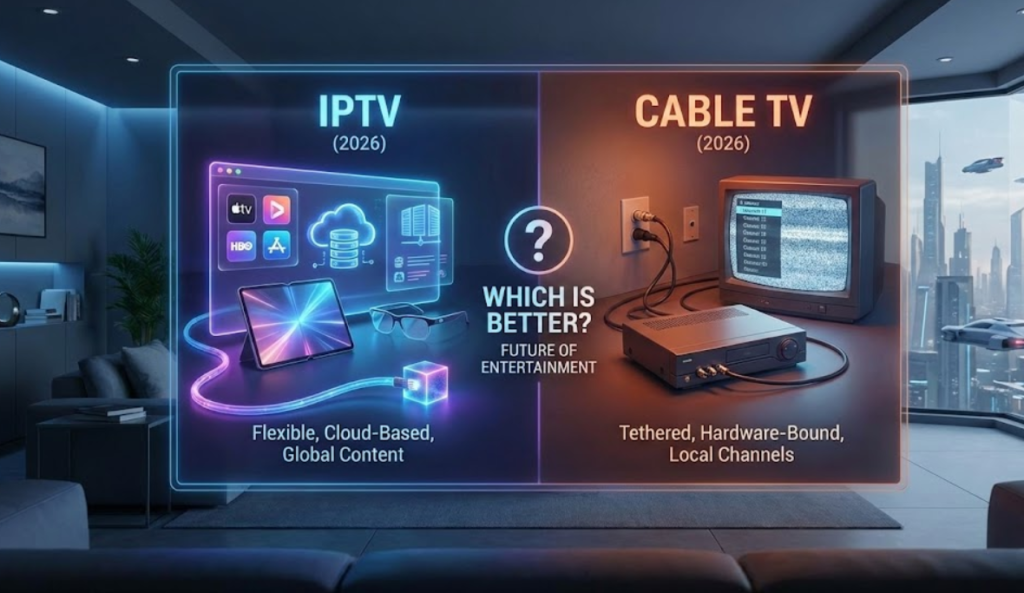
Content Volume: IPTV vs Cable Channels
Content availability is crucial in the IPTV vs cable debate. Here’s what each offers:
| Feature | Cable TV | IPTV (IPTV Architect) |
|---|---|---|
| Live Channels | 100-500 channels | 47,000+ channels WINNER |
| Movies & Series | Limited on-demand | 200,000+ titles WINNER |
| International Content | Very limited | 100+ countries WINNER |
| Sports Coverage | Requires premium packages | All sports included WINNER |
| 4K Content | Very limited | Extensive 4K library WINNER |
The cable vs IPTV content comparison isn’t even close. IPTV services provide exponentially more content across all categories. While cable limits you to regional channels and expensive premium add-ons, IPTV gives you access to global content in one subscription.
Streaming Quality: IPTV vs Cable
Picture and sound quality matter significantly in the IPTV vs cable comparison:
Cable TV Quality
- Standard Definition (SD): Common on basic packages
- High Definition (HD): Available on most channels
- 4K Ultra HD: Extremely limited, requires special equipment
- Compression: Moderate compression can affect quality
- Consistency: Generally stable, weather can affect signal
IPTV Quality
- Standard Definition (SD): Available for slower connections
- High Definition (HD/720p): Standard across most content
- Full HD (1080p): Widely available
- 4K Ultra HD: Growing library of 4K content
- Adaptive Streaming: Automatically adjusts to your connection
- Consistency: Depends on internet speed and stability
🎬 Quality Verdict
In the IPTV vs cable quality comparison, both can deliver excellent picture quality. Cable offers slightly more consistent performance regardless of internet speed, but IPTV provides access to more 4K content and adaptive streaming that optimizes quality based on your connection.
Device Compatibility: IPTV vs Cable Flexibility
How and where you can watch is a major factor in IPTV vs cable:
Cable TV Limitations
- Requires cable box for each TV ($10-20/month per box)
- Limited to your home location
- Mobile apps available but with restrictions
- Cannot watch on computers without additional software
- DVR recording limited to box storage capacity
IPTV Advantages
- Works on Smart TVs, Fire Sticks, Roku, Apple TV
- Watch on smartphones and tablets (iOS and Android)
- Stream on computers (Windows, Mac, Linux)
- Use on gaming consoles
- Access from anywhere with internet
- No additional equipment costs
- Install on unlimited devices
Winner: IPTV – The flexibility and device compatibility of IPTV make it the clear winner in this category of the IPTV vs cable comparison.
Installation and Setup: IPTV vs Cable
Getting started is very different when comparing IPTV vs cable:
📺 Cable TV Setup
- Requires professional installation
- Installation appointment needed (often weeks wait)
- Drilling and cable running through walls
- Equipment installation and configuration
- Time: 2-4 hours
- Cost: $50-100
📱 IPTV Setup
- DIY installation in minutes
- Download app on your device
- Enter login credentials
- Start watching immediately
- Time: 5-10 minutes
- Cost: $0
In the IPTV vs cable installation comparison, IPTV’s simplicity and zero-cost setup provide a significantly better user experience.
Contract Terms: IPTV vs Cable Commitments
Contractual obligations differ dramatically in cable vs IPTV:
Cable TV Contracts
- Typically require 12-24 month contracts
- Early termination fees: $150-300+
- Promotional pricing ends after first year
- Prices often increase 5-15% annually
- Equipment must be returned when canceling
- Difficult cancellation process
IPTV Subscriptions
- Month-to-month subscriptions available
- No early termination fees
- Cancel anytime without penalty
- Stable, predictable pricing
- No equipment to return
- Simple online cancellation
Winner: IPTV – The flexibility and freedom in the IPTV vs cable contract comparison make IPTV far more consumer-friendly.
Customer Support: IPTV vs Cable Service
Support quality matters in the long-term IPTV vs cable experience:
Cable TV Support
- Phone support with often long wait times
- Limited hours (typically 8 AM – 8 PM)
- Technician visits for issues (often days wait)
- Service visits may incur charges
- Cable companies notorious for poor customer service
IPTV Support
- 24/7 support via WhatsApp, Telegram, email
- Instant messaging for quick responses
- Remote troubleshooting
- Free setup assistance
- Comprehensive FAQ and guides
- Direct access to support team
Internet Requirements: IPTV vs Cable Needs
An important consideration in IPTV vs cable is internet dependency:
Cable TV
- Internet Required: No (works independently)
- Advantages: Works during internet outages
- Disadvantages: Requires separate cable infrastructure
IPTV
- Internet Required: Yes (minimum 10-15 Mbps for HD)
- Advantages: Uses existing internet connection
- Disadvantages: Affected by internet outages or slow speeds
- Recommended Speed: 25-50 Mbps for 4K and multiple streams
Most households in 2026 have adequate internet for IPTV. If you can stream Netflix or YouTube without issues, IPTV will work perfectly. The cable vs IPTV internet requirement is a minor consideration given today’s internet infrastructure.
Ready to Make the Switch from Cable to IPTV?
Experience the IPTV advantage with IPTV Architect. Get 47,000+ channels, 200,000+ movies, 4K streaming, and save over $1,500 annually compared to cable TV. Try it free for 24 hours!Start Free Trial
Special Features: IPTV vs Cable Extras
Modern features set these services apart in the IPTV vs cable comparison:
| Feature | Cable TV | IPTV |
|---|---|---|
| Cloud DVR | Limited (50-100 hours) | Often unlimited |
| Pause/Rewind Live TV | Requires DVR rental | Built-in feature |
| Catch-Up TV | Limited availability | 7-30 days typically |
| Multiple Profiles | Not available | Yes, personalized |
| Parental Controls | Basic | Advanced options |
| Multi-Screen Viewing | Extra cost per TV | Often included |
| Picture-in-Picture | Rarely available | Common feature |
Reliability and Uptime: IPTV vs Cable Performance
Service reliability is crucial in the IPTV vs cable debate:
Cable TV Reliability
- Uptime: Generally 99%+
- Weather Impact: Severe weather can disrupt signal
- Infrastructure Issues: Local cable line problems affect service
- Maintenance Outages: Scheduled maintenance periods
IPTV Reliability
- Uptime: Premium services offer 99.9% uptime
- Internet Dependent: Performance tied to internet quality
- Server Infrastructure: Redundant servers minimize downtime
- Adaptive Technology: Adjusts to maintain streaming
Both services offer excellent reliability in 2026. The IPTV vs cable reliability comparison shows that with a quality IPTV provider and stable internet, both services perform comparably.
Legal and Safety Considerations: IPTV vs Cable
Legitimacy matters in choosing between IPTV vs cable:
Cable TV
- Fully licensed and legal
- Regulated by FCC
- Established providers with legal content rights
IPTV
- Technology is legal and legitimate
- Major companies (Netflix, Hulu, YouTube TV) use IPTV
- Choose reputable providers with proper licensing
- Look for established services with customer support
- IPTV Architect operates legally with appropriate rights
⚠️ Important Note
When comparing IPTV vs cable, always choose legitimate IPTV providers. Reputable services like IPTV Architect operate legally and provide proper customer support, guarantees, and professional service.
Environmental Impact: IPTV vs Cable Sustainability
Eco-conscious consumers consider environmental factors in cable vs IPTV:
Cable TV Environmental Footprint
- Requires extensive physical infrastructure
- Multiple set-top boxes consuming electricity 24/7
- Regular equipment upgrades create e-waste
- Transmission of all channels constantly (high energy use)
IPTV Environmental Benefits
- Uses existing internet infrastructure
- Streams only requested content (more efficient)
- Works on existing devices (less e-waste)
- More energy-efficient data transmission
Winner: IPTV – The IPTV vs cable environmental comparison favors IPTV’s more efficient, sustainable approach.
Future-Proofing: IPTV vs Cable Technology
Looking ahead in the IPTV vs cable comparison:
Cable TV is declining technology. Cable companies are losing millions of subscribers annually. Future investments in cable infrastructure are decreasing, and many predict cable will be obsolete within 10-15 years.
IPTV represents the future of television. Continuous improvements in streaming technology, 5G networks, and internet speeds will only make IPTV better. All major entertainment companies are shifting to streaming/IPTV models.
Who Should Choose Cable TV?
Despite IPTV advantages in most IPTV vs cable comparisons, cable might suit you if:
- You have very slow or unreliable internet (under 10 Mbps)
- You live in a rural area without good internet options
- You bundle cable with internet for a significant discount
- You’re extremely resistant to technology changes
- You watch only local channels (antenna + basic cable)
Who Should Choose IPTV?
IPTV wins the IPTV vs cable comparison if you:
- Have internet speeds of 10+ Mbps
- Want to save $1,000+ annually
- Desire access to international content
- Watch on multiple devices
- Value flexibility and no contracts
- Want 4K content and modern features
- Prefer comprehensive sports coverage
- Seek a massive on-demand library
Final Verdict: IPTV vs Cable Winner
After examining every aspect of IPTV vs cable, IPTV emerges as the clear winner for most households in 2026. Here’s the final scorecard:
| Category | Winner |
|---|---|
| Cost | IPTV (saves $1,200-2,000/year) |
| Content Volume | IPTV (47,000+ vs 100-500 channels) |
| Flexibility | IPTV (watch anywhere, any device) |
| Installation | IPTV (5 minutes vs hours) |
| Contracts | IPTV (no commitment) |
| Features | IPTV (modern features) |
| Quality | Tie (both excellent) |
| Reliability | Tie (both highly reliable) |
Overall Winner: IPTV wins 6 out of 8 categories decisively.
Making the Switch from Cable to IPTV
Ready to choose IPTV in the IPTV vs cable decision? Here’s how to make a smooth transition:
- Test Your Internet Speed: Ensure you have 10+ Mbps (use speedtest.net)
- Try IPTV First: Get a free trial before canceling cable
- Choose Your Devices: Decide how you’ll watch (Smart TV, Fire Stick, etc.)
- Sign Up for IPTV: Subscribe to a reputable service like IPTV Architect
- Use Both Briefly: Keep cable for a week while testing IPTV
- Cancel Cable: Once satisfied with IPTV, cancel your cable subscription
- Return Equipment: Return cable boxes and equipment to avoid charges
- Enjoy Savings: Start saving $100+ monthly!
💡 Pro Tip
When making the IPTV vs cable decision, try IPTV Architect’s free 24-hour trial. Test it thoroughly on all your devices, watch your favorite channels, and verify the quality. There’s no risk, and you’ll know definitively which option is better for you.
Conclusion: IPTV vs Cable – The Clear Choice
The IPTV vs cable comparison reveals that IPTV offers superior value, content, flexibility, and features for the vast majority of households. While cable served us well for decades, IPTV represents the future of television entertainment.
With IPTV, you get:
- 94x more channels than average cable (47,000+ vs 500)
- $1,200-2,000 in annual savings
- Freedom to watch anywhere on any device
- No contracts or commitments
- Modern features cable can’t match
- 4K content and massive on-demand library
The question isn’t whether IPTV is better than cable – the data clearly shows it is. The real question is: why are you still paying for expensive cable when superior alternatives exist?
Make the smart choice. Join millions who’ve already discovered that in the battle of IPTV vs cable, IPTV is the undisputed champion.
Experience the IPTV Advantage Today
Don’t take our word for it – try IPTV Architect free for 24 hours. See firsthand why IPTV beats cable in every way that matters. No credit card required. No obligation. Just pure entertainment.Get Your Free Trial Now